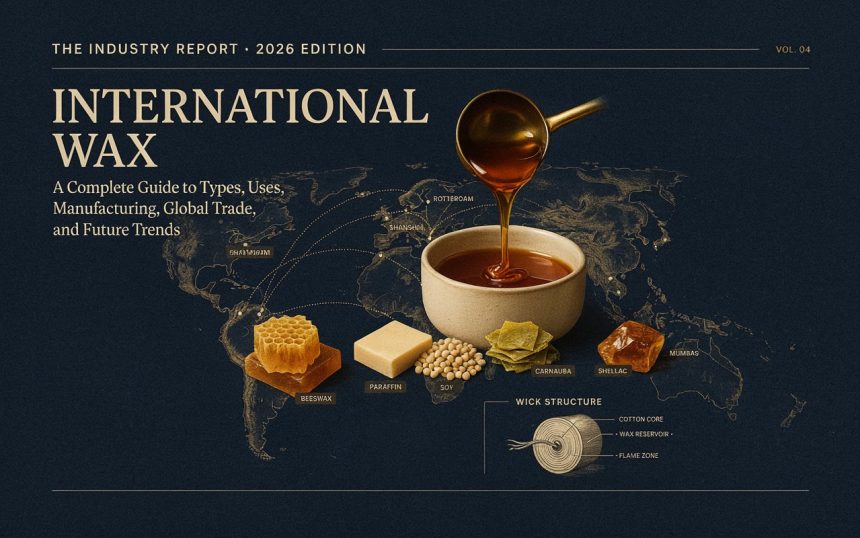
Wax is one of those everyday materials that most people rarely think about, yet it quietly plays an important role in modern life. From candles and cosmetics to food packaging, automotive products, pharmaceuticals, and industrial manufacturing, wax has become an essential raw material across countless industries. The global wax market continues to expand as manufacturers develop innovative products that meet consumer demands for quality, sustainability, and performance.
Whether you’re lighting a scented candle, polishing your car, applying lip balm, or opening a package of cheese, there’s a good chance wax has contributed to the experience. But what exactly is international wax? How is it produced, traded, and used around the world? This guide explores every major aspect of the global wax industry, helping readers understand its importance, challenges, and future opportunities.
What Is International Wax?
The term international wax refers to the worldwide production, distribution, trading, and application of different kinds of wax across industries and countries. Rather than representing a single product, it encompasses a broad category of natural, mineral, synthetic, and plant-based waxes that are manufactured and exported globally.
Countries produce wax from various sources depending on their natural resources and industrial capabilities. Some specialize in petroleum-derived waxes, while others focus on renewable plant waxes or natural beeswax.
Today, international supply chains ensure manufacturers can source the most suitable wax for their products regardless of where it originates.
The History of Wax Around the World
Wax has been part of human civilization for thousands of years. Ancient societies used natural waxes for lighting, preservation, waterproofing, and artistic expression.
Early Civilizations
Egyptians used beeswax for sealing documents and preserving valuable objects.
Romans produced candles using animal fats and natural waxes.
Chinese craftsmen incorporated wax into bronze casting techniques.
Indigenous cultures worldwide discovered plant waxes that protected food and created water-resistant coatings.
As industrialization progressed during the nineteenth century, petroleum refining introduced paraffin wax, dramatically increasing availability while lowering production costs.
The twentieth century saw the emergence of synthetic waxes designed for specialized industrial applications, further transforming global markets.
Different Types of Wax Used Internationally
The global wax market consists of numerous varieties, each offering unique characteristics suited to specific industries.
Paraffin Wax
Paraffin remains one of the most widely used waxes worldwide.
Common applications include:
- Candle manufacturing
- Packaging
- Cosmetics
- Crayons
- Food preservation
- Paper coatings
Its affordability and versatility have made it a favorite among manufacturers.
Beeswax
Produced naturally by honeybees, beeswax is valued for its purity and pleasant aroma.
Popular uses include:
- Lip balms
- Skin creams
- Furniture polish
- Food wraps
- Handmade candles
Soy Wax
Soy wax comes from soybean oil and has become increasingly popular due to growing environmental awareness.
Benefits include:
- Renewable source
- Cleaner burning
- Lower soot production
- Excellent fragrance retention
Carnauba Wax
Harvested from Brazilian palm leaves, carnauba wax is one of the hardest natural waxes available.
Industries use it in:
- Automotive wax
- Pharmaceutical coatings
- Chocolate glazing
- Cosmetic formulations
- Furniture polish
Microcrystalline Wax
Unlike paraffin, this wax has finer crystals and greater flexibility.
Applications include:
- Adhesives
- Industrial coatings
- Electrical insulation
- Rubber manufacturing
Synthetic Wax
Modern manufacturing has introduced synthetic waxes engineered for precise industrial performance.
These products often provide:
- Better durability
- Higher melting points
- Greater chemical stability
- Improved consistency
Major Industries That Depend on Wax
Think of wax as the invisible thread woven through dozens of industries. You may never notice it, but remove it, and many everyday products would lose their performance or appeal.
Candle Manufacturing
Candles remain one of the largest consumers of wax globally.
Manufacturers combine various waxes with fragrances, dyes, and additives to create products that serve decorative, ceremonial, and emergency purposes.
Cosmetics and Personal Care
Beauty products frequently contain wax because it provides texture, structure, and moisture retention.
Examples include:
- Lipstick
- Mascara
- Lip balm
- Hair styling products
- Skin creams
Food Industry
Food-grade wax helps preserve freshness and appearance.
Examples include:
- Cheese coatings
- Fruit protection
- Candy glazing
- Bakery products
Pharmaceutical Industry
Medical manufacturers use specialized waxes for:
- Tablet coatings
- Controlled-release medicines
- Ointments
- Medical creams
Automotive Sector
Vehicle care products rely heavily on wax formulations.
These include:
- Car polish
- Protective coatings
- Tire shine
- Surface sealants
Packaging Industry
Wax coatings improve moisture resistance and durability in:
- Cardboard
- Corrugated boxes
- Paper packaging
- Food wrappers
Global Production and Leading Exporting Regions
Wax production occurs across numerous countries, each specializing in particular types.
Petroleum-Producing Nations
Countries with extensive oil refining operations produce significant quantities of paraffin and microcrystalline wax.
Their refining infrastructure allows efficient large-scale manufacturing.
Agricultural Regions
Nations with strong soybean production have expanded soy wax manufacturing to meet rising demand for renewable alternatives.
Tropical Countries
Certain tropical climates support plants that naturally produce commercial waxes, including palm-derived varieties.
Beekeeping Regions
Countries with well-established apiculture industries export premium-quality beeswax used in cosmetics and artisanal products.
International trade enables manufacturers to source raw materials that best match their production requirements.
Quality Standards in the Global Wax Industry
Quality control is essential because different applications require different performance characteristics.
Manufacturers evaluate wax using several factors.
Melting Point
Different products require waxes that melt at precise temperatures.
Hardness
Hardness determines durability, polish quality, and resistance to wear.
Color
High-quality refined wax generally appears white or translucent, although natural waxes may retain yellow or brown tones.
Purity
Industries such as pharmaceuticals and food processing require exceptionally pure materials that meet strict safety standards.
Odor
Cosmetic and candle manufacturers often choose low-odor waxes because they allow added fragrances to shine without being masked by the wax’s own scent.
Sustainability and Environmental Considerations
Consumers increasingly ask an important question: Is the wax being used environmentally responsible?
That question has encouraged manufacturers to invest in greener production methods.
Renewable Resources
Plant-based waxes are becoming increasingly popular because they are made from renewable crops, making them a more sustainable option for many industries.
Responsible Beekeeping
Ethical beeswax production supports healthy bee populations while maintaining biodiversity.
Recycling Opportunities
Certain industrial waxes can be recovered and reused, reducing manufacturing waste.
Lower Carbon Footprints
Improved production technologies help reduce greenhouse gas emissions during manufacturing and transportation.
Many businesses now balance performance with environmental responsibility when selecting wax materials.
Factors Influencing Global Wax Prices
Like many commodities, wax prices fluctuate due to several market forces.
Crude Oil Prices
Petroleum-derived waxes often become more expensive when oil prices rise.
Agricultural Harvests
Poor soybean harvests may affect soy wax availability.
Transportation Costs
International shipping expenses influence final market prices.
Industrial Demand
Growing demand from cosmetics, packaging, and automotive sectors increases consumption.
Environmental Regulations
New environmental policies sometimes encourage manufacturers to transition toward sustainable alternatives, affecting supply and pricing.
Innovations Shaping the Future of Wax
The wax industry continues evolving through research and technological innovation.
Bio-Based Alternatives
Scientists are developing environmentally friendly waxes made from renewable resources.
Smart Manufacturing
Automation improves production consistency while reducing waste.
Advanced Blends
Manufacturers increasingly combine multiple wax types to achieve customized performance.
Improved Fragrance Technology
Modern candle waxes now retain fragrances longer and distribute scents more evenly.
Eco-Friendly Packaging
New wax coatings help replace certain plastic materials used in food packaging.
Innovation ensures the industry remains relevant despite changing consumer expectations.
Choosing the Right Wax for Different Applications
Selecting the appropriate wax depends on several practical considerations.
Intended Use
Industrial coatings require different characteristics than cosmetic formulations.
Temperature Conditions
Products exposed to heat need waxes with higher melting points.
Surface Compatibility
Some waxes adhere better to wood, while others perform best on metal, paper, or skin.
Sustainability Goals
Companies seeking environmentally friendly products often prefer renewable plant waxes.
Cost Efficiency
Large manufacturers balance quality with production budgets when selecting raw materials.
Choosing the correct material is much like selecting the right ingredient for a recipe. Even a small change can significantly affect the final result.
Challenges Facing the International Wax Industry
Despite steady growth, the industry faces several ongoing challenges.
Supply chain disruptions can delay shipments and increase costs.
Changing environmental regulations require manufacturers to adapt production methods.
Competition from alternative materials encourages continuous innovation.
Raw material availability varies depending on weather, agriculture, and petroleum production.
Consumer expectations continue shifting toward sustainable and ethically sourced products.
Companies that invest in research, quality assurance, and responsible sourcing are better positioned for long-term success.
Future Outlook of the Global Wax Market
Industry experts expect continued growth across multiple sectors over the coming years.
Several trends support this positive outlook:
- Rising demand for premium candles
- Expansion of cosmetic manufacturing
- Growth in pharmaceutical production
- Increased use of biodegradable materials
- Greater investment in sustainable alternatives
- Technological improvements in manufacturing
As industries continue searching for materials that combine performance with environmental responsibility, wax is likely to remain an important component of countless products.
Conclusion
International wax is far more than a simple material used in candles. It represents a diverse global industry connecting agriculture, petroleum refining, cosmetics, pharmaceuticals, food production, packaging, automotive care, and advanced manufacturing. From traditional beeswax to innovative bio-based alternatives, each variety serves a unique purpose while contributing to everyday products that millions of people rely on.
As sustainability, technology, and consumer expectations continue to evolve, manufacturers are investing in cleaner production methods, renewable resources, and higher-quality formulations. The future of the global wax industry appears promising, driven by innovation, international trade, and the ongoing need for reliable materials across numerous sectors.
Frequently Asked Questions (FAQs)
1. What is international wax?
International wax refers to the worldwide production, trade, distribution, and use of various wax types, including natural, mineral, synthetic, and plant-based waxes used across many industries.
2. Which industries use wax the most?
Major users include candle manufacturing, cosmetics, pharmaceuticals, food processing, automotive care, packaging, furniture care, and industrial manufacturing.
3. Is soy wax better than paraffin wax?
Soy wax is renewable, biodegradable, and generally burns cleaner, while paraffin wax is more affordable and offers excellent performance in many commercial applications. The better choice depends on the intended use.
4. What are the main factors affecting global wax prices?
Prices are influenced by crude oil costs, agricultural production, transportation expenses, industrial demand, environmental regulations, and international supply chain conditions.
5. Why is sustainable wax becoming more popular?
Consumers and manufacturers increasingly prefer renewable, biodegradable, and responsibly sourced materials that reduce environmental impact while maintaining product quality and performance.